Colour is the first thing a buyer sees and the last thing they forgive. A weave can be flawless, a knit perfectly gauged, a garment cut to the millimetre — but if the shade is off, if the batches don’t match, or if the colour bleeds in the first wash, the whole order is at risk. That is why the choice of a yarn dyeing partner is one of the most important decisions a textile manufacturer makes.
At Saleemi Yarn Dyeing in Faisalabad, we specialise in reactive dyeing for cotton and cellulosic yarns and disperse dyeing for polyester and synthetic yarns, serving spinners, weavers, knitters and garment exporters in both local and international markets. This guide answers the questions we hear most often — what yarn dyeing actually involves, which methods suit which products, how quality is controlled, and what to look for in a dyeing house before you commit an order.
What is yarn dyeing?
Yarn dyeing is the process of applying colour to yarn before it is woven or knitted into fabric, rather than dyeing the finished cloth or garment. Because the colour penetrates the fibre at the yarn stage, dyed yarn produces richer, deeper and more durable shades — and it makes patterned fabrics possible in the first place. Stripes, checks, plaids, jacquards, denim and heather melanges all rely on yarn that was coloured before construction.
For a manufacturer, dyeing at the yarn stage offers three practical advantages:
Deeper, more even colour penetration than piece dyeing, because the dye reaches the core of each fibre. Greater design freedom, since multiple pre-dyed colours can be combined on the loom or knitting machine. And better colour consistency across a large production run when batches are managed correctly.
The trade-off is that yarn dyeing requires accurate forecasting: you commit to colours before the fabric exists. That is exactly why the reliability of your dyeing partner matters so much.
The main yarn dyeing methods
Different products call for different dyeing techniques. Understanding them helps you brief your dyeing house precisely and get the result you expect.
Package dyeing
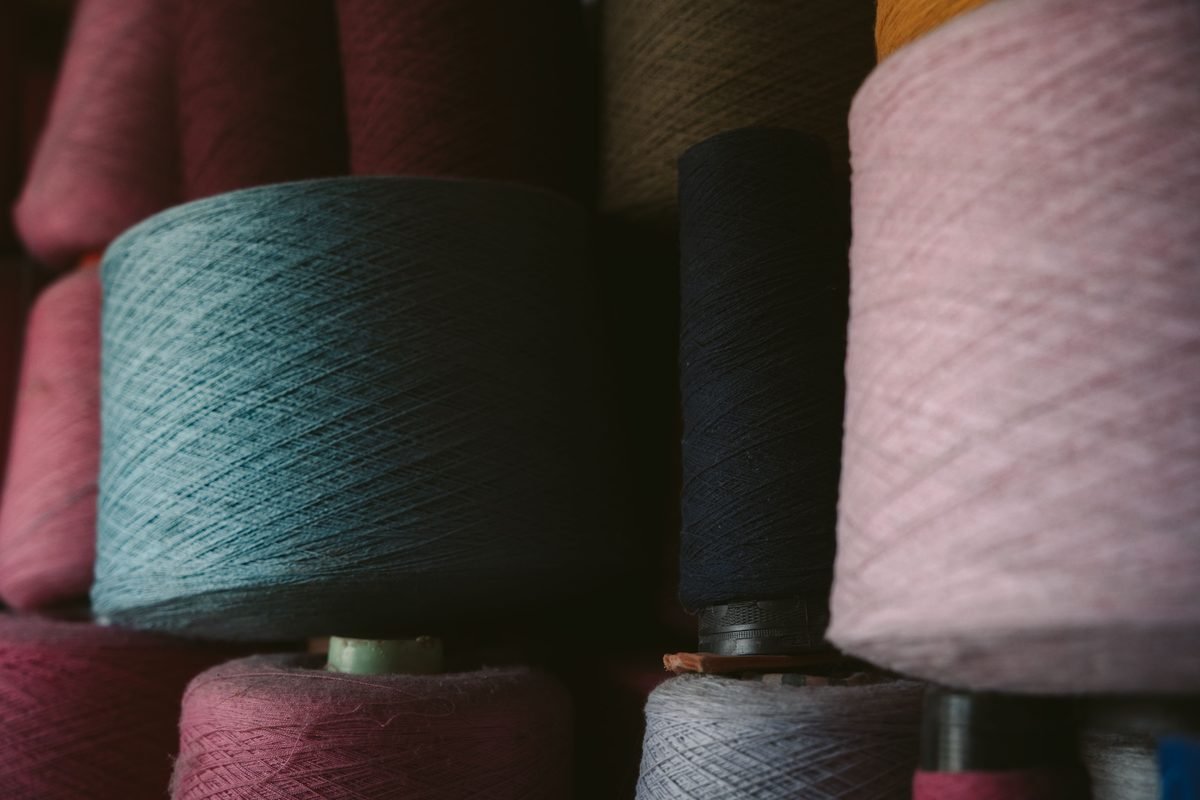
Package dyeing is the workhorse of modern yarn dyeing. Yarn is wound onto perforated cones or “packages,” which are stacked onto spindles and loaded into a pressurised vessel. Dye liquor is then circulated through the packages under controlled temperature and pressure so the colour reaches every layer evenly. Package dyeing offers excellent reproducibility, efficient dye usage and strong colour fastness, which makes it the standard choice for cotton, polyester and blended yarns destined for weaving and knitting.
Hank (skein) dyeing
Here the yarn is dyed in loose hanks rather than tightly wound packages. Because the yarn is under less tension, hank dyeing preserves loft, softness and bulk — which is why it is favoured for hand-knitting yarns, carpet yarns, acrylics and premium soft-handle products. It is more labour-intensive than package dyeing but delivers a superior handle where softness is the priority.
Beam dyeing
For very large volumes of a single colour, yarn can be wound onto a perforated beam and dyed in one operation. Beam dyeing suits warp yarns and high-volume commodity orders where efficiency per kilogram is critical.
Space dyeing and melange
When a yarn needs multiple colours along its length, or a marled, heathered look, specialist techniques such as space dyeing and fibre-blend (melange) dyeing come into play. These create the tonal, multi-colour effects popular in fashion knitwear and sportswear.
Our specialities: reactive dyeing and disperse dyeing
The dye class must match the fibre — choosing the wrong chemistry is the single most common cause of poor colour fastness. At Saleemi Yarn Dyeing we specialise in the two dye systems that cover the vast majority of the world’s yarn: reactive dyeing for cotton and cellulosic yarns, and disperse dyeing for polyester and synthetic yarns. Focusing on these two lets us do them exceptionally well, with tight shade control and dependable fastness.
Reactive dyeing (cotton & cellulosic yarns)
Reactive dyes form a strong covalent chemical bond with the cellulose fibre rather than just sitting on the surface. That bond is what gives cotton its bright, deep shades and excellent wash fastness — the colour becomes part of the fibre. Reactive dyeing is the gold standard for cotton, viscose and other cellulosic yarns used in knitwear, wovens, home textiles and apparel. It offers a huge shade gamut, from soft pastels to rich saturated tones, and holds up to repeated laundering when processed correctly.
We control every stage of the reactive process — dye fixation, thorough washing-off of unfixed dye, and neutralisation — so that finished cones deliver clean, reproducible colour with strong wash and rub fastness.
Disperse dyeing (polyester & synthetic yarns)
Polyester is hydrophobic, so it cannot be coloured with water-soluble dyes. Disperse dyes are finely dispersed, low-solubility dyes applied at high temperature and pressure so they penetrate and lock into the polyester fibre. Disperse dyeing is essential for polyester and poly-blend yarns used in sportswear, activewear, linings, industrial textiles and blended fabrics, and it delivers excellent colour fastness to washing and light when the process is properly controlled.
Our disperse dyeing is run under carefully managed temperature and time curves, with reduction clearing where needed, to achieve level, well-penetrated shades on polyester cones.
Between these two systems, we can colour the fibres that make up most textile supply chains — cotton and cellulosics by reactive dyeing, polyester and synthetics by disperse dyeing — and, for cotton/polyester blends, run the two processes in sequence so both fibre components match to a single target shade.
How colour quality is controlled
“Getting the colour right” is not a single step — it is a chain of controls, and every link matters.
Shade matching and lab dips
Before any bulk production, the dyeing house prepares a lab dip: a small sample matched to your target shade under standard lighting. Good practice is to assess shades in a light box under multiple illuminants (such as D65 daylight, store lighting and incandescent) to guard against metamerism — where two samples match under one light but clash under another. Only once the lab dip is approved does bulk dyeing begin.
Batch-to-batch consistency
On large orders, the enemy is variation between dye lots. Reputable dyers use spectrophotometers to measure colour numerically (Delta-E values) rather than relying on the eye alone, and they keep tight records of recipes, water quality and process curves so a shade can be reproduced months later on a repeat order. Ask any potential partner how they manage lot-to-lot consistency — the answer tells you a great deal.
Colour fastness testing
Fastness is how well the colour survives real life. The key tests for dyed yarn include fastness to washing, rubbing (crocking), light, and perspiration. If your fabric is heading into childrenswear, sportswear or export markets, fastness standards are not optional — they are contractual. A serious dyeing house tests to recognised standards (such as ISO and AATCC methods) and can supply results.
What textile manufacturers should ask a dyeing partner
Whether you are placing your first order or looking to switch suppliers, these are the questions that separate a reliable dyeing house from a risky one.
Capacity and lead time. What is the daily or monthly dyeing capacity, and what is the realistic turnaround from approved lab dip to delivered yarn? Consistent lead times let you plan production; unpredictable ones cost you shipments.
Minimum order quantities. MOQs vary by colour and method. Can the partner handle both your bulk commodity shades and smaller runs for sampling or fashion colours?
Colour range and matching ability. Can they match to Pantone, to a physical swatch, or to your existing standard? How fast is their lab-dip turnaround?
Quality systems and certifications. Do they hold relevant certifications — for example [OEKO-TEX® Standard 100] for restricted substances, or [ISO 9001] for quality management — and can they meet the compliance requirements of your export customers? (Confirm Saleemi’s exact certifications here.)
Sustainability and effluent treatment. Modern buyers increasingly ask about water use, ZDHC-compliant chemistry and effluent treatment. A dyeing house with a proper water-treatment plant is both more responsible and more export-ready.
Consistency on repeats. Can they reproduce a shade six months later for a repeat order? Reliable re-matching is where many suppliers quietly fail.
Why yarn dyeing quality affects your bottom line
It is tempting to treat dyeing as a commodity and chase the lowest price per kilogram. In practice, dyeing quality flows straight through to cost:
A shade mismatch discovered at the fabric or garment stage can force a full re-make — the most expensive kind of rework. Poor fastness leads to customer returns, claims and lost accounts. Uneven dyeing (barré, streaks, tailing) shows up as visible faults in the finished fabric. And inconsistent lots mean you cannot mix rolls freely, which slows your cutting room.
Good dyeing, by contrast, is almost invisible — it simply lets the rest of your process run smoothly. That is the standard we hold ourselves to.
Serving both local and international markets
Textile supply chains are global, and a dyeing partner has to speak both languages: the fast turnarounds and flexible MOQs that local manufacturers need, and the documentation, compliance and consistency that international buyers demand. Saleemi Yarn Dyeing has grown by serving both — supporting domestic weavers and knitters with responsive, dependable dyeing while meeting the fastness, colour-accuracy and compliance expectations of export customers.
That dual focus shapes everything we do: disciplined shade matching, instrumented colour control, tested fastness, and a commitment to reproducing your colours order after order.
Frequently asked questions about yarn dyeing
What is the difference between yarn dyeing and fabric dyeing? Yarn dyeing colours the yarn before it is woven or knitted, which allows woven-in patterns like stripes and checks and gives deeper colour penetration. Fabric (piece) dyeing colours finished cloth in a single solid shade. Yarn dyeing generally offers better fastness and design flexibility; piece dyeing is quicker for solid-colour fabric.
Which yarn dyeing method is best? It depends on the product. Package dyeing is the standard for cotton and blended yarns going into weaving and knitting because of its consistency and fastness. Hank dyeing is preferred where softness and loft matter, such as hand-knitting and carpet yarns. Beam dyeing suits very large single-colour volumes.
How is colour consistency guaranteed across a large order? Through instrumented colour measurement (spectrophotometers and Delta-E tolerances), tightly recorded recipes and process controls, and careful lot management so that shades match from one batch to the next.
Can you match a specific Pantone or a physical sample? Yes. A lab dip is prepared and approved against your Pantone reference or physical swatch before bulk dyeing begins, and shades are checked under multiple light sources to avoid metamerism.
What is the difference between reactive dyeing and disperse dyeing? Reactive dyeing is used for cotton and cellulosic yarns — the dye forms a chemical bond with the fibre for bright shades and strong wash fastness. Disperse dyeing is used for polyester and synthetic yarns — the dye is applied at high temperature so it penetrates and locks into the fibre. Different fibres need different chemistry, which is why we offer both.
Which yarns do you dye? We specialise in reactive dyeing for cotton and cellulosic yarns, and disperse dyeing for polyester and synthetic yarns — including cotton/polyester blends, which we process so both fibres match a single target shade.
What about fastness for export orders? Dyed yarn can be tested for wash, rub, light and perspiration fastness to recognised ISO and AATCC standards, with results supplied to meet buyer and export requirements.
Talk to Saleemi Yarn Dyeing
If you are a spinner, weaver, knitter, garment manufacturer or brand looking for a dependable yarn dyeing partner for reactive or disperse dyeing — locally or for export — we would be glad to discuss your shades, volumes and timelines.
📍 Plot #4-B, Value Addition City, Khurrianwala, Faisalabad, Pakistan ✉️ contact@saleemiyarndyeing.com 🌐 www.saleemiyarndyeing.com
Send us your colour reference and yarn specification, and we’ll prepare a lab dip so you can see the quality for yourself.